Sustainable AI Infrastructure: Why Iceland Is the Blueprint
Powering, cooling, and scaling AI workloads responsibly
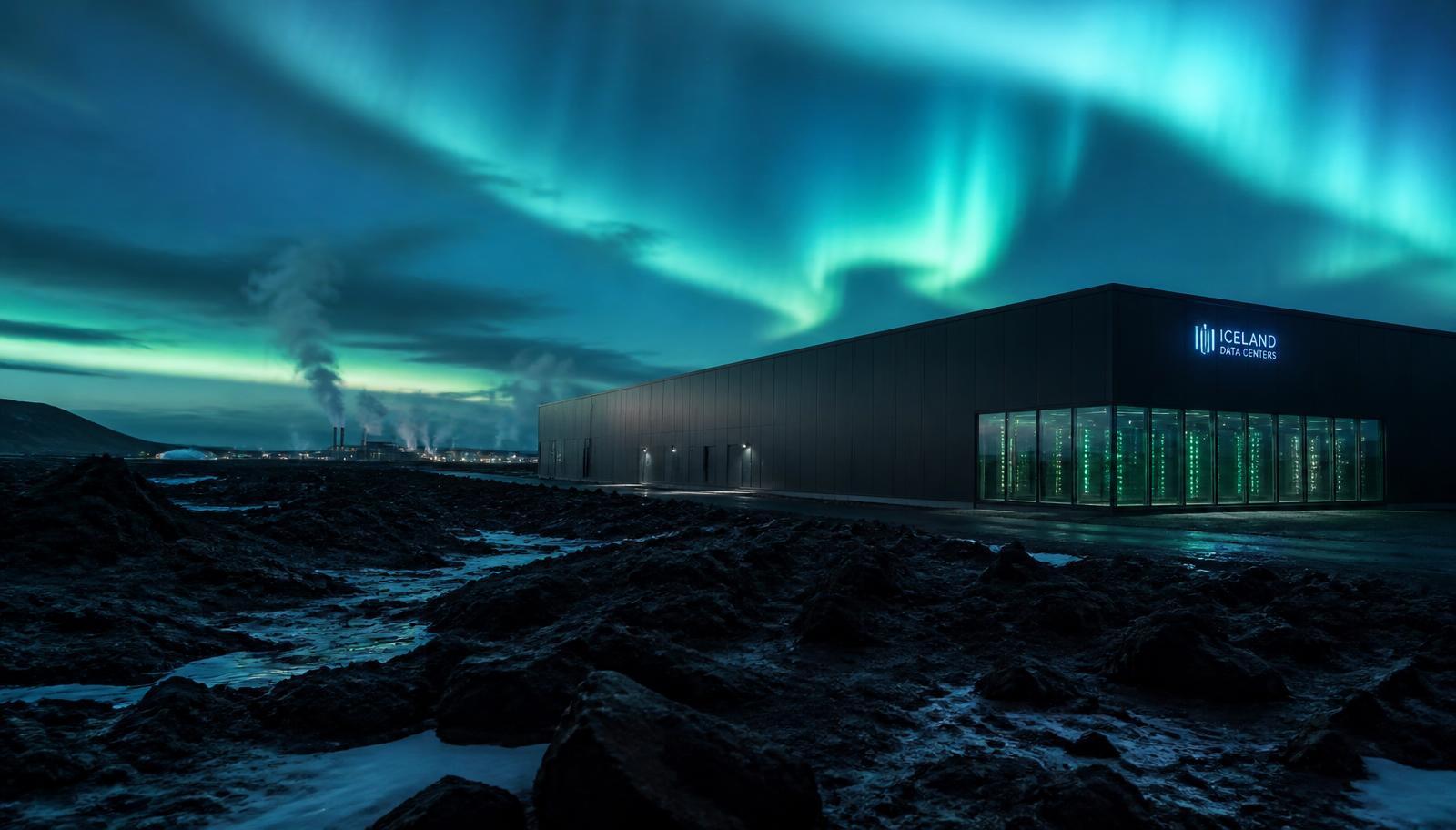
AI workloads have changed the infrastructure conversation. Racks that used to be planned around storage and bandwidth are now planned around power draw and heat rejection. For hosting providers and data center operators, sustainable AI infrastructure is no longer a marketing line — it is a capacity, cost, and procurement question that lands on the executive agenda every quarter.
The three constraints that now shape AI capacity
- Power. Density per rack keeps climbing, and grid availability — not floor space — is increasingly the limiting factor on where new capacity can be built.
- Cooling. Higher density pushes operators toward liquid and hybrid cooling designs, which changes both capex and day-to-day operations.
- Unit economics. Energy price and carbon exposure now flow straight into the price of an AI-capable service, and into what enterprise buyers will sign.
Why Iceland keeps coming up
Iceland's data centers run on a 100% renewable grid built on geothermal and hydro power, and the country's naturally cool climate reduces the energy needed for cooling year-round. That combination is why Iceland is used so often as a reference point in sustainability discussions: it is a working example of high-density compute running on renewable energy rather than a projection of what might be possible later.
For an operator, the practical questions that follow are the interesting ones. What actually transfers to a site on a different grid? Which parts of the design are geography-specific, and which are simply good engineering that any operator can adopt?
What executives are asking now
- How do you plan capacity when power, not space, is the scarce resource?
- What do enterprise buyers genuinely require on sustainability reporting — and what is still optional?
- Where does renewable sourcing improve unit economics, and where does it only improve the story?
- How do sustainability commitments hold up when an AI customer triples their footprint in a quarter?
Where this gets discussed at Atlas Digital Summit 2026
Sustainability runs through the whole programme rather than sitting in a single session. Power, cooling, and the unit economics of running AI workloads on hosting platforms — and how Iceland's renewable grid changes the math — is one of the recurring threads across the keynotes, panels, and executive roundtables. You can review the full programme on the agenda, or read more about why we chose Reykjavík on the about page.
Atlas Digital Summit 2026 takes place 28–29 September 2026 in Reykjavík, Iceland, bringing together C-level hosting, data center, and infrastructure leaders in a private, invite-only format.
Join the conversation
Attendance is by invitation. If you lead infrastructure, hosting, or data center strategy and want to be part of this discussion, request your invitation.